Why notebook khata fails quietly
The register never lies on purpose — it just decays. Lines get skipped during rush, two entries for one customer live on different pages, a paid amount gets ticked but not deducted, and at settlement time both parties remember it differently. The cost isn't only the money that slips; it's the awkwardness with customers you've known for years.
How StoreSaathi's khata works differently
Udhaar starts as a bill, not a line
When you sell on credit, the checkout creates a proper invoice linked to the customer — items, quantities and amounts included. Their balance updates automatically. At settlement, "what did I take?" is answered by showing actual purchases, which ends most disputes before they start.
Partial payments are first-class
Roz thora thora is how Pakistani retail actually settles. Record any amount any day — see handling partial payments — and the remaining balance recalculates instantly with full history preserved.
One ledger view per customer
The built-in customer ledger shows every credit, payment and outstanding total. Reviewing who owes what before Eid or month-end becomes a two-minute scan instead of an evening with three notebooks — see reviewing outstanding dues.
Connected, not isolated
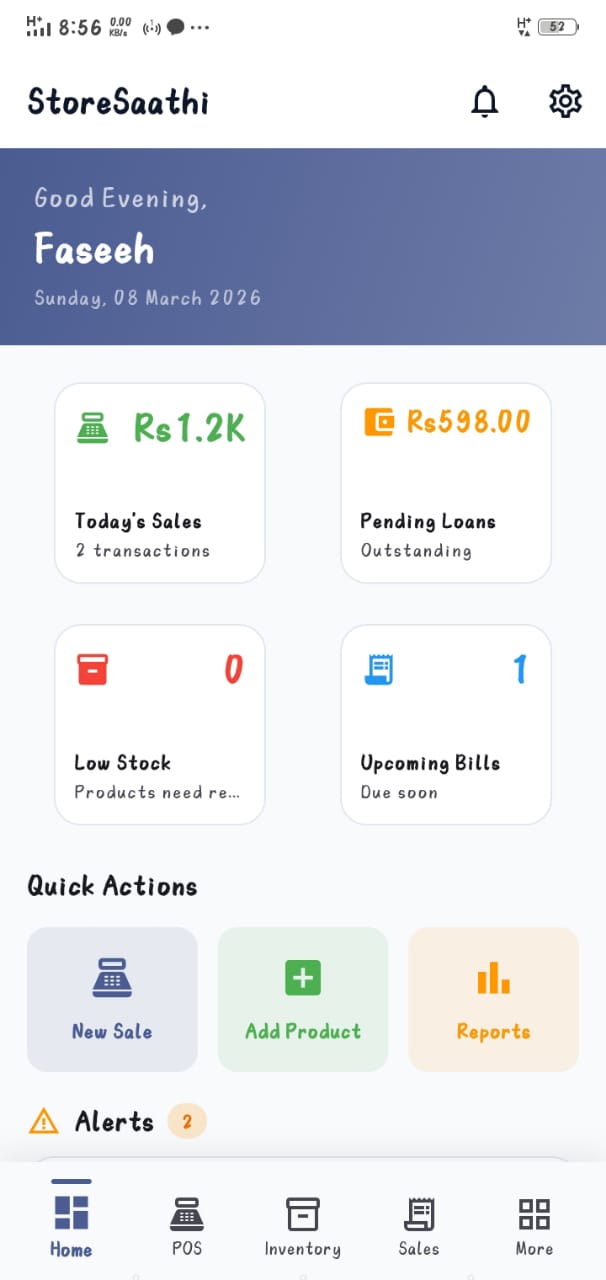
Because khata lives beside billing, stock and reports, your receivables appear in the same daily numbers as your sales — the way digital khata for shops was always supposed to work.
Moving your existing register across
Start with customers who owe money: add them with their current balance as an opening entry, then let all new activity flow through the app. Old pages can retire gradually. The full transition plan is in paper khata to digital khata, and if you're still weighing options, read manual vs digital khata plus the honest list of common khata mistakes.